One of our more dramatic instructors recently looked at the sky and, in a perfect John Snow impression, muttered, “Winter is Coming.” And he’s right, it is. But winter’s poor reputation in flight training is undeserved. We actually see far more cancelled and delayed flights in the summer than during the winter.
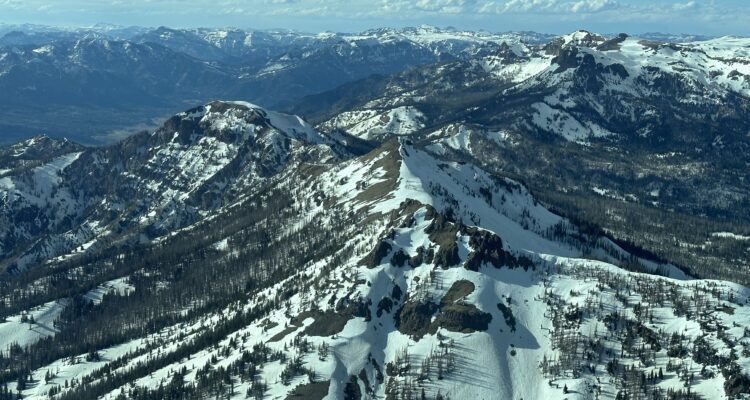
As temperatures drop and we spend more and more time flying into the mountains to look at the changing colors, we’re reminded of why. Smoother air, better aircraft performance and more reliable weather are all among the many reasons winter in Colorado is a great time for flight training and time-building.
Winter Flying: Calm, Cool & Collected
Tell someone you’re planning to fly in Colorado during January and they’ll usually picture snowstorms, frozen airplanes, and months of cancelled flights. And sure, winter brings snow, freezing temperatures, and occasional weather that makes flying a bad idea. But Colorado also gets plenty of cold, dry, clear days that are excellent for flying. A winter storm might shut you down for a day or two, but the days after are without fail some of the calmest, best flying you can find.
There’s an old railroad and real estate marketing slogan from the 1850s about Colorado’s amazing “300 days of sunshine” and while it might be a slight exaggeration, it’s not too far off: Colorado Springs averages about 250 days of sunshine per year—and most of the remaining 120 are still extremely flyable. Average temperatures have risen about 2.5º F in Colorado since 1980, which comes with problems for some industries, but not for flying.
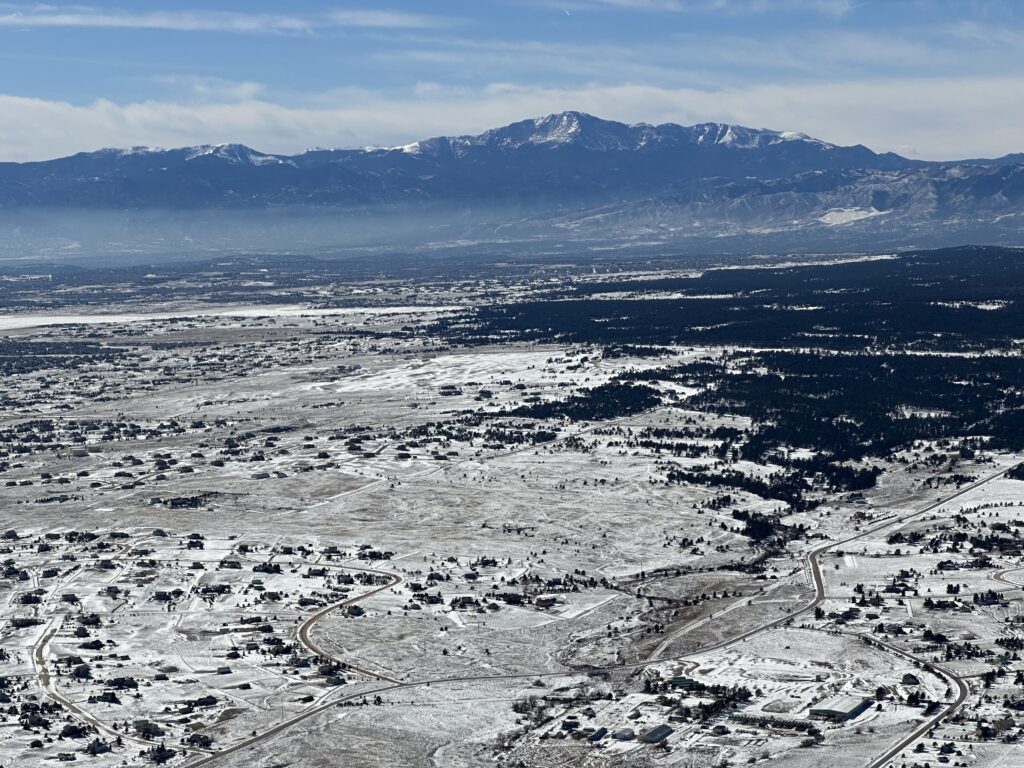
Weather airborne in Colorado Springs is usually smoother thanks to the calmer movement of air masses. Winds can be high in the shoulder seasons, but they often offer great opportunities for practicing crosswind takeoffs and landings and provide excellent performance. Wind makes aircraft fly, after all.
We often joke that the biggest detriment to winter flying is getting off the ground. We say this for several reasons. Traditionally, costs for training operations are kept lower by keeping aircraft outside. This means snow and ice must melt from the wings before the aircraft is flyable. Taxiways and runways must be kept clear, as well, so flying is often delayed until several hours after a storm. Thankfully, the runways and taxiways at Meadow Lake Airport in Colorado Springs are maintained by a team of volunteers who live on the airport. The Flight School at Meadow Lake also hangars all of its aircraft, so neither of these considerations often cause more than an hour or two delay following a storm.
Summer Nights Aren’t All That
I was flying from Durango to Colorado Springs the other night. It was a typical late-summer evening, with thunderstorms building over the Front Range. A pilot who’d flown a similar route the night before reported holding for an hour while waiting for pop-up storms to dissipate. As the other pilot and I were setting up the onboard radar to hunt for gaps in the weather, I joked that flying this time of year is like being on the opposite side of a game of “whack-an-airplane.”
We quickly started swapping stories of near-death experiencing dealing with thunderstorms, mountain wave turbulence and other hazards of mountain flying—all of which, we agreed, can be more frequent and sudden in the summer months. A beautiful morning can turn into an afternoon of thunderstorms, strong winds, turbulence, lightning, and rapidly changing conditions. For flight schools and time-builders, losing an afternoon to thunderstorms is still lost flying time, even if it’s 80°F outside.
Winter weather tends to be more obvious; you’ll know when a snowstorm is coming. Colorado’s post-storm weather can then clear quickly, producing excellent flying conditions.
Cold Weather Improves Aircraft Performance
Cold air is dense air. Dense air generally means better aircraft performance.
Density Altitude: Pressure altitude, corrected for nonstandard temperature. In other words, the altitude the aircraft feels like it’s flying. The hotter it is, the thinner the air and thus, the higher the density altitude.
Compared with a hot summer afternoon at Colorado’s high-elevation airports, winter can provide:
- Better engine performance
- Better propeller efficiency
- Shorter takeoff distances
- Better climb performance
- Lower density altitude
Summer: “Temperature is 85ºF, Density Altitude is 9800, winds are moderately gusty and there’s a Tango AIRMET for the entire Front Range. Thunderstorms expected in two hours.” Should you fly? What are the risks?
When summer heat makes high-density-altitude operations noticeably less safe, our instructors scramble to mitigate the risks, cancel or postpone. Those decisions are much more difficult to make, because often the answer isn’t obvious. Even if it’s hot out, the performance charts may say takeoff is a go, but the safety margins may be much thinner than is comfortable for a flight with a brand new student. If it’s colder out, that safety margin improves drastically.
Winter: “Temperature is 34ºF, Density Altitude is 4500, winds are calm and sky is clear. There’s a Zulu AIRMET for the Rockies, but only above 15,000 and it’s clear below 12,000.” Should you fly? How are the risks different?
Of course, cold weather creates its own considerations, but those risks are much easier to deal with. We hangar all of our aircraft so you don’t need to sweep, pre-heat or do any sort of extra pre-flight nonsense. Frost, snow, icing, engine temperatures, and aircraft limitations all have to be taken seriously, but it’s an easy call to make because the “go/no go” line is often much more obvious.
The Mountains are Cool when it’s Cool
On a cold, clear winter day, Colorado can be spectacular.
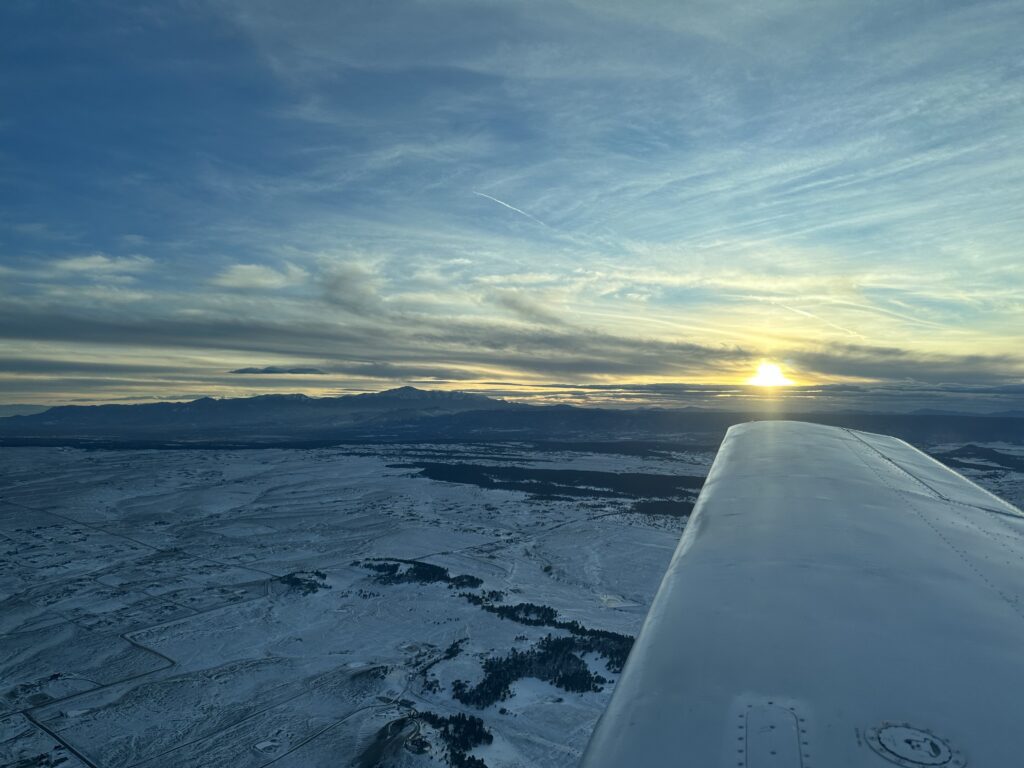
Cold, dry air can produce excellent visibility, and the snow-covered plains, foothills and mountains remain some of the most gorgeous scenery in the country. For pilots training around the Front Range, Pikes Peak and the surrounding mountains make a memorable backdrop.
Winter also provides valuable exposure to mountain weather, wind, turbulence, and changing conditions without the reduced safety margin of high density altitudes.
Winter Time-Building: Time to Grind
One winter benefit for time-builders is clear: The summertime flyers disappear. So do all the distractions.
When the weather gets cold, a lot of recreational pilots stop flying. This means less competition for airplanes and more scheduling flexibility for students and time-builders.
If you’re trying to accumulate hundreds of hours, waiting until spring because it’s “better flying weather” doesn’t make much sense. Spring, though short in Colorado, remains the worst time of year for flying.
Winter, on the other time, is the time to stack up the night XC hours.
The Point: Go Fly
I learned to fly during a Colorado winter many years ago. At the now-defunct flight school I attended, the biggest issue wasn’t weather: it was dragging my flight instructor off the couch to fly when I wanted to go fly and she wanted to watch Hallmark movies in the FBO lounge. She was a good sport about it, but it probably helped that I bribed her with peppermint lattes and cookies (this is the official technique to get any flight instructor to do anything, by the way).
Especially in an aviation career, you’ll need to get used to the weather. All of the weather. There are distinct advantages to learning to fly during the winter, the spring and the fall, but which one you choose to get started won’t matter much. Time’s always leaving and you need to capture some of it in your logbook if you want to be a better pilot. If you don’t fly in the winter, you’ll never learn to handle the unique challenges wintertime can offer. So go fly, even when it’s cold outside.